All felony charges against Seth Daniel Snook were either dropped or deferred, and his attorney maintains the cows at Snook Brook Farms weren’t starving.

Snook’s lawyer, Emily Beschen, argues that the Whatcom Humane Society committed a series of blunders by failing to renew a Superior Court authorization to act as animal control, carrying out an illegal warrant, and destroying the living evidence – the cows, many of which were shot in the head based on one cow’s false-positive test for an infectious disease.
Snook has filed a lawsuit against Whatcom County and the humane society in U.S. District Court for defamation and 18 other alleged injustices.
Public records obtained by The Bellingham Herald tell the story of how the case fell apart. Snook declined an interview for this article.
The Farm
Snook’s dairy came to the attention of animal control in late March, when a farm loan manager, Houston Bruck, tipped off an agriculture investigator in an email about conditions: “Poor feed, poor conditions, animals dying – not good,” Bruck wrote.
Snook, 35, said he fell on hard times when his wife underwent cranial surgery in summer 2016. He was left to care for her, their three daughters and the farm at 6804 Kickerville Road, where Snook’s mother makes cheese under the Pleasant Valley Dairy brand.

Snook fell behind on debt payments. Animals died on the farm, and went weeks without getting buried.
Records show Snook had been warned about the need to bury dead livestock, to prevent the spread of disease, when inspectors found “mortalities present” on the farm two years earlier. He was not cited then.
Bruck took photos of three fresh carcasses in Snook’s barn in March 2017.
Other farmers also noticed the conditions on the farm, because its manure runoff was polluting ditches and Terrell Creek, a hazard to salmon, shellfish and beaches at a nearby state park.
Some concerned farmers offered help, or even to buy the dairy. They noted the farm itself was in poor condition, but did not see any signs of outright animal cruelty, according to Whatcom Family Farmers, a farm advocacy group. Snook refused to sell the farm.
By Spring 2017, Snook’s cows lived in unsanitary conditions, on a barn floor of sawdust compacted with manure, according to reports by Dr. Amber Itle, a field veterinarian with the state Department of Agriculture. Cows could wander into an unfenced manure lagoon, a sanitation and safety concern, Itle wrote.

Animal control officers stepped in to help feed the cows in April.
Itle said four of Snook’s cattle were in such poor shape they should be euthanized. Snook’s attorney doesn’t dispute that a few cows were too thin. Perhaps five had medical reasons that could justify euthanasia, Beschen said, but state law says the owner and a licensed veterinarian should be consulted, “whenever possible.”
Snook gave permission on April 17 for animal control to kill one cow, Babs, who couldn’t lift herself up. He surrendered another sick calf, Becky, who is still alive. Sixteen more were killed at the direction of the humane society without Snook’s input, and in most cases without an endorsement from the veterinarian who shot them.

Warrant Issues
Just before the cattle were seized by animal control, Itle gave Snook three options: sell them; gift the cows to another dairy; or allow routine check-ins from a nutritionist, a veterinarian and animal control. He agreed to sell. The cows were prized Jerseys and Holsteins with good genes, Beschen said.
“He would give them away before he would sell them for meat,” the attorney said.
Nonetheless, Itle advised the cows should go to slaughter.
Snook missed a beef cattle auction in Everson on a Monday in April. He messaged an animal control officer that he would go to the dairy auction that Wednesday so his cows could land in a dairy, and not in a hamburger.
Text messages in the court record show animal control Sgt. Rebecca Crowley replied to Snook, “Yes that’s fine.”

Hours before the dairy auction, however, 23 cows were taken without warning, while Snook worked a graveyard shift at a new non-farming job.
Asked why the deal was broken, humane society director Laura Clark said animal control “remained concerned about the fragile physical condition of the cow victims and their ability to be safely transported and housed at the auction.”
Crowley’s undated report cites anonymous sources who told her Snook planned to sell the cows at auction and buy them back. Crowley feared the cows wouldn’t survive being transported twice, she wrote, and returning the cows to the Snook farm would mean “sealing their fate to be starved to death.” She reported Snook later confirmed that was his plan. Beschen said he misinterpreted the reason he’d been told to sell. Snook thought it was about a lien, Beschen said, not law enforcement.
Records are scarce from the night Crowley executed the warrant. There were no reports from the Whatcom County Sheriff’s Office, because deputies were not present at the scene, a violation of the state law that spells out the powers of animal control officers.

A cow on Seth Snook’s farm on March 29, 2017
Animal control can serve warrants, the law says, but [because they are not certified officers] only if a sheriff’s deputy or a police officer is present. Snook wasn’t provided an evidence inventory receipt - which lists all the property seized from the suspect.
As a result, Snook had no documents to show the cows’ condition at the time of seizure.
“I have never (heard) of something like this done under cover of darkness,” Snook texted Crowley, after he came home to find his cows gone.
Starving, or ‘Arguably Perfect?’
Six of the cows were sent to Pasado’s Safe Haven in Monroe, an animal sanctuary. Two of those were the subject of animal cruelty charges. All six are still alive.
Videos of the cows were taken within two days of seizure. A veterinarian hired by Snook’s defense watched the footage, inspected the cows in person in June, and found they were in almost perfect condition both times.
To be fair, Snook's vet that he hired inspected the cows after they'd been receiving rehabilitative care for two months. Also, you cannot watch a video and determine the health of an animal - it requires hands-on inspection.
Animal control officers painted a far different picture.
“At least 28 animals have been starved and some have starved to death by Mr. Snook,” charging papers state, based on Crowley’s report.
Dairy cows’ bodies are scored on a scale of 1 (emaciated) to 5 (obese), with 3 being a healthy medium. Bruck considered Snook’s cows to be “around a 1, some 2’s, maybe a 3 in there.”
Itle said in April they looked to be in the 1 or 2 range – from “emaciated” to “poor” – but two weeks later said all could be classified as 1 to 1 ½.
Based on [merely watching a video], the defense’s [paid] veterinarian scored the cows in the 2 ½ to 3 range, “arguably perfect,” Beschen wrote.
Another veterinarian at Pasado’s graded the cows at 2 or 3, but on the beef cattle scale, which goes to 9. Dairy cows aren’t supposed to look like beef cows.

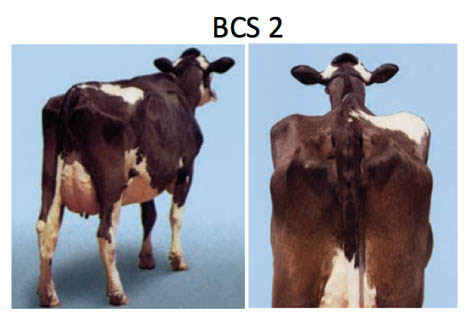

A "3" is considered to be ideal for the average dairy cow
Authorities need to make sure that the 'experts' they're relying on know what they're doing. If you use a dog and cat vet for a livestock case, yes, that vet took courses in college regarding livestock but likely for the last 20 years has not regularly examined or treated livestock. This vet should've known there are different body scoring systems, with different sets of numbers, for beef cattle, for dairy cows, for chickens, for sheep, for pigs, etc.
“As dairy cows can be tricky to assess, I’m glad there will be multiple sets of eyes on this issue,” Bruck wrote when he first tipped off inspectors about the farm.
Snook kept cows that were well beyond their prime milking age, and according to his attorney, one of the less healthy cows, Trixie, belonged to someone else, who had entrusted her to Snook to nurse her back to health. Trixie and two others were killed at the humane society’s direction in April, because they couldn’t rise without great difficulty, if at all. Trixie appeared to be “particularly emaciated,” according to the humane society.
Ten more were euthanized by Dr. Robert Holt, a Whatcom County veterinarian, when a blood test on one cow in that group came up positive for Johne’s Disease, an infectious chronic wasting disease present in an estimated 68 percent of U.S. dairy cattle herds.

Roxy, a pregnant cow seized by the Whatcom Humane Society, on
April 26, 2017. She was among 12 cows who underwent blood tests
for Johne’s disease in early May. One test came up positive, but
was later proven to be negative by a more reliable fecal test, court
records show. In the meantime, the cows were euthanized.
The disease can be fatal, eventually, but Holt wrote he saw no urgent need to kill these cows, or any of the dozen cows killed in May, according to court papers. He said he had been directed to do so by the humane society.
Most of the cows were euthanized May 9, the same day Snook petitioned to keep the cows from being killed. He beat the deadline to make that request by a day, according to Beschen.
A fecal test on the supposedly infected cow later came back negative for Johne’s. Fecal tests are considered the gold standard to test for the disease. No necropsies were performed on any of the cows.
“The Whatcom Humane Society made the difficult decision to euthanize many of the cow victims in this case due to their physical and medical conditions as well as their exposure to a highly contagious disease,” Clark said via email.
“We made the difficult decision based on the information we had at the time,” she added.
Legal Hang-ups
Whatcom County contracts through the Whatcom Humane Society for animal control, as do about half such agencies in the state, said Brian Boman, the president of the Washington Animal Control Association based in Pierce County. Other counties, like Pierce, run an animal control unit through their respective sheriff’s offices.
Animal control agencies often have to go through extra steps to collect and store evidence in cases of alleged neglect, for obvious reasons.
“Our evidence is alive and breathing, it needs to eat. … We have to treat it as evidence, because if we don’t treat it properly, we’re going to ruin our case,” Boman said. “We’ve had some animals in custody for six months (in Pierce County), regardless of the funding aspects, because that’s what we need to do.”
Washington state law requires animal control officers to complete training that’s “satisfactory to a judge” – a program like the National Animal Control and Humane Officer Training Academy, better known as NACHO; or Animal Control Training Services, ACTS, or the training Boman leads through the state association.

Cows on Seth Snook’s farm on March 29, 2017
Once the training is completed, a judge must re-authorize animal control officers every three years.
Whatcom Humane Society animal control officers received training, but missed deadlines to re-certify, starting as far back as 2010. Earlier this month, Superior Court Judge Deborra Garrett ruled the officers were certified moving forward. But she did not give a retroactive approval to officers who missed their deadlines, including Crowley.
Meanwhile, other past or current animal cruelty cases shouldn’t be affected by the oversight, said Eric Richey, the chief criminal deputy prosecutor.
Charges in Snook’s case were based on reports put together by the humane society and the state Department of Agriculture.
My Thoughts
Seth Snook is no angel. A year prior, animals were starving and dying and left to rot. He was given a "get out of jail free" card back then, probably due to the medical issues his wife was dealing with, and given an opportunity to make corrections and take better care of the animals. This is not unusual when dealing with livestock and farmers; it's their livelihood and like it or not, livestock animals such as chickens, pigs and cattle suffering is not seen as equal to a dog or cat suffering.
A year later, in March 2017, a farm loan manager was on the farm and saw horrific conditions - suffering and dead animals. The Department of Agriculture and Animal Control stepped in.
Snook gave permission for a cow and calf that were dying to be shot. However, for some reason, Animal Control directed a veterinarian to shoot and kill 16 emaciated cows - even though the vet objected to it. In my opinion, if this vet disagreed s/he should have refused and left the property.
Then Animal Control agreed to let Snook take his animals to auction. This was the best solution for all parties involved - including the animals. Snook missed a beef cattle auction on Monday, but had texted the animal control officer saying that he would instead take the dairy cows to a dairy auction that Wednesday -- just two days away. The officer told him that was fine and then they swooped in Wednesday morning with a search warrant and seized the cattle.
This was a HUGE mistake and should never have happened. It would be one thing if he'd refused to maintain contact with animal control or he'd been planning on hauling them to another jurisdiction to hide them. However, I would think that Snook would get more money for dairy cows, whatever shape they're in, at a diary auction rather than a beef auction. And it was only two more days.
Animal control officer Rebecca Crowley heard through the grapevine that Snook was planning on selling his cows at auction only to buy them back. OK, so what? I can only imagine he would lose money on this hair-brained idea. If he was dumb enough to do this, he'd be bringing the same cows back to his property and would still be under intense scrutiny.
So Crowley and Animal Control decide to secure a search warrant to seize the cows, which were being readied for transport to the dairy auction which was taking place later that day. They were in such a hurry to do this, apparently, that they broke the law which says that a certified law enforcement officer needed to be present on search warrants. Snook wasn't there when they showed up and loaded up his cows. They left a copy of the search warrant for him, but failed to leave a property receipt, which lists all the property removed.
Was a veterinarian on scene during the search warrant? You can't do a land grab and just take all the animals because you feel sorry for them or you don't think the owner 'deserves' them. You can only take the animals which are part of the cruelty case, animals that are evidence of animal cruelty. And, especially with livestock cases, a veterinarian is needed to determine body scores and physical health - and cherry pick the ones that need to be seized. As hard as it is, you have to leave animals behind sometimes. Unless, of course, you have a licensed veterinarian telling you to take them all - based on lack of food, dangerous living conditions, etc. This vet will be expected to defend this decision in the court case.
So now you've got Snook's attorney arguing the merits of the seizure. He's hired his own defense vet, if you will, who watches video of the animals of the seizure and proclaims them healthy. This is speculative. To properly body score an animal, you have to put your hands on the animal, not watch some shaky video. This same vet hired by the defense did eventually do a hands-on exam on the cows, proclaiming them healthy - but only after the cows had been seized and properly fed for two months.
Then, we move on to the issue with Dr. Robert Holt. Tests were done on ONE cow that resulted in, what we now know was a false positive for Johne's disease. Despite Dr. Holt's objections, animal control ordered that the ten cows be shot and killed. Dr. Holt also claimed that he had objected to the previous group of cows being killed.
Snook had a deadline of May 10 to file a petition to try to convince a judge to stop the cows from being put down. He filed the papers on May 9th, the same day that most of the cows were killed. This really smells bad... the only way animal control could've killed the cows is if a vet made the medical decision that it was necessary to end their suffering. Well, the vet in question, Dr. Holt says he never agreed to this.
But, I also have to question whether Dr. Holt is being truthful at this point? Now he says he objected to it, but if he objected to it back when the cows were still alive, why did he kill (euthanize) them? If I were him, I'd have told Crowley, "I don't agree with this and I'm not putting them down. I'm not going to be a part of this" and I would've left. Why did Dr. Holt go ahead and kill them? Sure makes it seem like Dr. Holt is now just trying to save his own butt.

After killing all the cows suspected of harboring Johne's disease, fecal tests came back negative. No necropsies were done, which is needed to determine what diseases the cows had that might explain their poor physical condition. If nothing comes back with the necropsy results, then it would have had to have been because Snook starved them. However, because no necropsies were done, they left it open for the defense to argue that anything could have resulted in emaciated conditions of the cows - poison, cancer, etc. and the prosecution can't argue against it because they don't know either.
Finally, the icing on the crap cake is that these animal control officers hadn't bothered to get themselves re-certified for more than seven years. That's like a police officer losing his/her certification but still making arrests.
Like I said, Seth Snook is no angel. I believe he has, for years, starved and neglected his livestock animals and when they died, he left them to rot. They were means to make money. If he couldn't afford to feed them, oh well. When they died, oh well. He rebuffed assistance from the farming community and basically stuck his head in the sand and ignored the ever-worsening conditions and suffering he inflicted on his animals.
A cow on Seth Snook’s farm on March 29, 2017
This case turned sour when animal control broke the verbal (and text) contract by telling Snook he could sell them at the dairy auction and then seizing them within hours of the auction. From there, it just got worse and worse.
As a result, Snook does not have to answer for his crimes - of which I'm sure he's guilty of (starving his animals, failing to provide needed veterinary care, proper disposal of dead animals). The still-surviving livestock animals were ordered returned to him and Snook has filed a lawsuit against the county. My guess is he will quietly receive a fairly decent sized settlement check - paid for by the taxpayers of Whatcom County for this clusterf**k of an investigation.
The people in charge of this investigation need to be fired and the rest need to have extensive remedial training to prevent something like this from ever happening again.
Earlier:
- Washington: Seth Snook, owner of Snook Brook Farms who sells cheese under the name Pleasant Valley Dairy, starved dozens of animals to death, say police
- Washington: Seth Snook, who sells "artisan cheese" under the name Pleasant Valley Dairy, starved dozens of livestock animals to death. He was given a deal that will wipe his animal cruelty charges off his record; was also given his surviving livestock back so he can finish starving them to death


